The Monster
In 2007, Steve Jobs refused to let anyone inside the iPhone. In 2026, Apple opened the door—but gave Siri the only key.

The Monster
In 2007, Steve Jobs refused to let anyone inside the iPhone. In 2026, Apple opened the door—but gave Siri the only key.
January 9, 2007. Steve Jobs has just unveiled the iPhone to a roaring Moscone Center. Backstage, a reporter asks the obvious question: will developers be able to build apps for it?
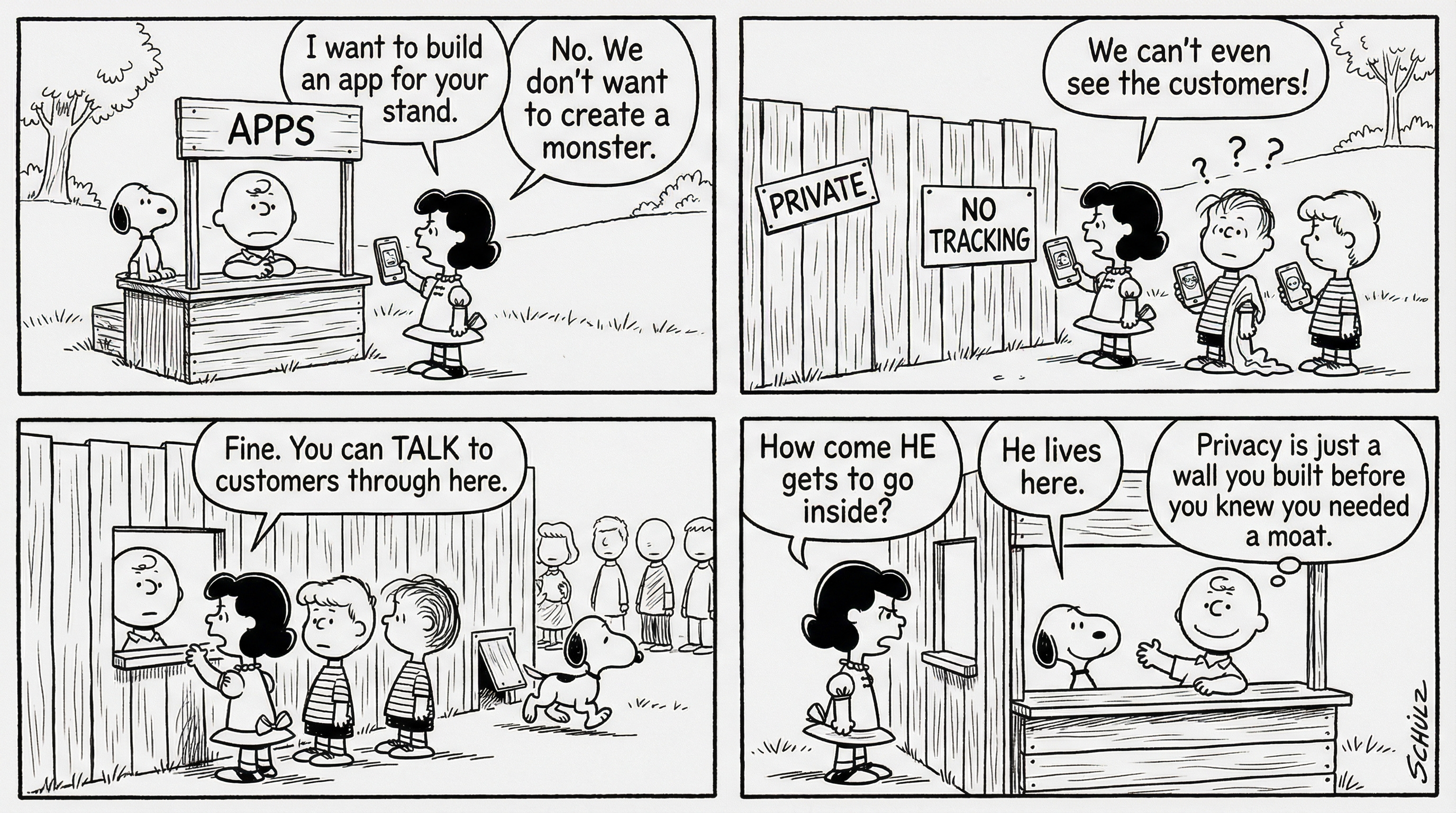
Jobs bristles. He cites viruses, policing headaches, network strain. "We don't want to create a monster," he says. He suggests web apps instead. The phone is sealed. Pure. His.
Four months later, venture capitalist John Doerr tells Jobs the iPhone is "crippled" without third-party apps. As Brent Schlender recounts in Becoming Steve Jobs, Jobs relents—rudely but quickly. He calls Doerr out of the blue, invites him to Cupertino. Kleiner Perkins proposes a $50 million developer fund; Scott Forstall prods: "Surely, you could do a hundred." By November, Apple announces an SDK. By July 2008, the App Store launches. The monster Jobs feared becomes the most profitable marketplace in technology history.
The pattern: refuse access, face pressure, open the door—but define the rules. App Review. Sandboxing. The 30% cut. The openness was real. The control was realer.
Apple just ran the same play with AI.
What Siri Can See
This week, Bloomberg reported that iOS 27 will ship a standalone Siri app—Apple's first dedicated AI interface. But the app is the least interesting part. What matters is what's behind it.
The new Siri, codenamed "Campo," can read your emails, scan your photos, and see what's on your screen. It takes actions across apps. Someone texts you an address—Siri adds it to their contact card. You're looking at a photo—"send this to Mom" and it's done. "What did Sarah email me about Thursday's meeting?" Siri knows.
No other AI can do any of this.
ChatGPT can write your cover letter. Claude can analyze a spreadsheet you upload. Gemini can search the web. But none of them can read the text your partner just sent. None of them can see your screen. None of them can move a photo from one app to another. They're sandboxed—walled off from the data that makes an AI actually useful in your daily life.
Siri isn't sandboxed. Siri lives inside the walls.
The Expansion Slots
Here's the twist. Apple is also opening Siri to competitors. iOS 27 introduces "Extensions"—a marketplace where Claude, Gemini, ChatGPT, Grok, and Perplexity can plug directly into Siri's interface. Users can even choose which AI handles each request. An App Store for AI.
But the Extensions don't get the keys. They route through Apple's interface, on Apple's terms. They can answer questions, generate images, search the web—the commodity tasks any chatbot can do. They cannot read your messages. They cannot see your screen. They cannot act across your apps.
In 1977, Steve Wozniak won a fight with Steve Jobs over eight expansion slots in the Apple II. Jobs wanted the machine sealed—an appliance so simple nobody would open it. Woz insisted on slots for printers, graphics cards, memory, lab equipment. Woz was right. The slots turned a computer into a platform.
But even Woz's slots didn't touch the machine's core ROM.
Extensions are expansion slots for AI. The personal data is the ROM.
The Interface Layer
Apple has always won by controlling the experience, not the technology underneath.
They didn't invent the portable music player. They built iTunes—"probably the best Windows app ever written," Jobs bragged in October 2003, standing in front of a slide that read "Hell froze over." The iPod's hard drive was Toshiba's. The music belonged to the labels. The interface was Apple's. In three days, one million Windows users downloaded iTunes and bought a million songs.
They didn't invent the smartphone. They built iOS—then opened it to developers, but only through App Review, only inside the sandbox, only for 30%. The radio was Qualcomm's. The glass was Corning's. The experience was Apple's.
Now they don't have the best AI model. Google's Gemini powers the brain. But Siri owns the face—the interface that sits on top of every model, with exclusive access to two billion devices' worth of personal data.
The Privacy Play
Here's what makes this different from every other AI race. Apple built the moat before it knew what the moat was for.
App Tracking Transparency. On-device processing. Sandboxed apps. Mail Privacy Protection. For a decade, Apple marketed these as consumer protection. They were. They also locked every competitor out of the personal data that now makes AI useful.
When Apple barred Flash from the iPhone in 2010, Jobs published six reasons—security holes, crashes, battery drain. All true. All beside the point. The real effect was killing Adobe's ability to be a platform on Apple's platform.
Privacy is the Flash ban of AI. The reasons are real. The result is a monopoly on context.
Fourteen Years
On October 4, 2011, Scott Forstall walked onstage and unveiled Siri as a "beta"—a word Apple almost never uses. As Adam Lashinsky describes in Inside Apple, it was a rare confession of unfinished business. Apple even kept the startup's original name, breaking its habit of rebranding acquisitions (Quattro became iAd, Lala became iCloud, SoundJam became iTunes). Siri stayed Siri.
Seven weeks earlier, on the day he resigned as CEO, Steve Jobs had interrupted a board meeting to grab the Siri iPhone prototype from Forstall's hands. "Give me the phone," he barked. Forstall held his breath—would the voice-trained assistant fumble for its new master? Jobs spoke. Siri replied: "I have not been assigned a gender, sir." The room laughed.
Jobs never saw the launch. And for fourteen years, Siri remained roughly what it was that day—a promising parlor trick, an acquisition Apple couldn't quite finish. The longest beta in tech.
But the walls Apple built while Siri stagnated—the privacy architecture, the on-device processing, the sandboxing that locked everyone else out—those weren't stagnating. They were hardening. And now that AI can finally use personal data, only one assistant has the key.
In 2007, Jobs called third-party access a "monster." He was right—just not the way he meant. The App Store monster generated $1.1 trillion in commerce in a single year. The question for 2026 is whether Siri's access to your life will be Apple's next monster—or everyone else's nightmare.
Also This Week
Apple turns 50: The company founded in a Los Altos garage on April 1, 1976 celebrates with events at every Apple Store, a Computer History Museum party, and a concert at Apple Park. Gurman's hint—"still going strong, was part of the British Invasion, and Jobs would've been ecstatic"—all but confirms Paul McCartney.
Golden handcuffs for designers: Apple is paying $200K–$400K retention bonuses to iPhone industrial designers to stop OpenAI from poaching them. OpenAI is building hardware and needs Apple's design DNA. The talent war that once required illegal no-hire agreements now runs on restricted stock.
Google VP defects to Apple: A former Google VP is now heading Apple Intelligence product marketing—a personnel move that signals Apple is gearing up for its biggest AI messaging push yet at WWDC in June.
From the Library
This newsletter draws on 14 books about Apple's history. Today's issue featured stories from:
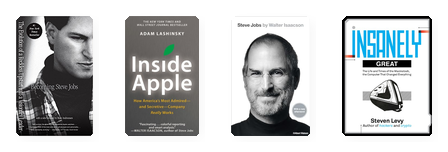
Becoming Steve Jobs by Brent Schlender — The App Store origin: Jobs's refusal, Doerr's challenge, and the four-month pivot from "monster" to marketplace
Inside Apple by Adam Lashinsky — Jobs grabbing the Siri prototype on the day he resigned; Siri's debut as Apple's first public "beta"
Steve Jobs by Walter Isaacson — "Hell froze over": iTunes for Windows and the FingerWorks multi-touch acquisition
Insanely Great by Steven Levy — How Macintosh invited third-party developers but enforced interface consistency through ROM toolbox rules